
Adaptogen Overview
Mapping the Adaptogen Landscape in Men's Daily Nutrition
Nathaniel Ashcroft
·
·
10 min read
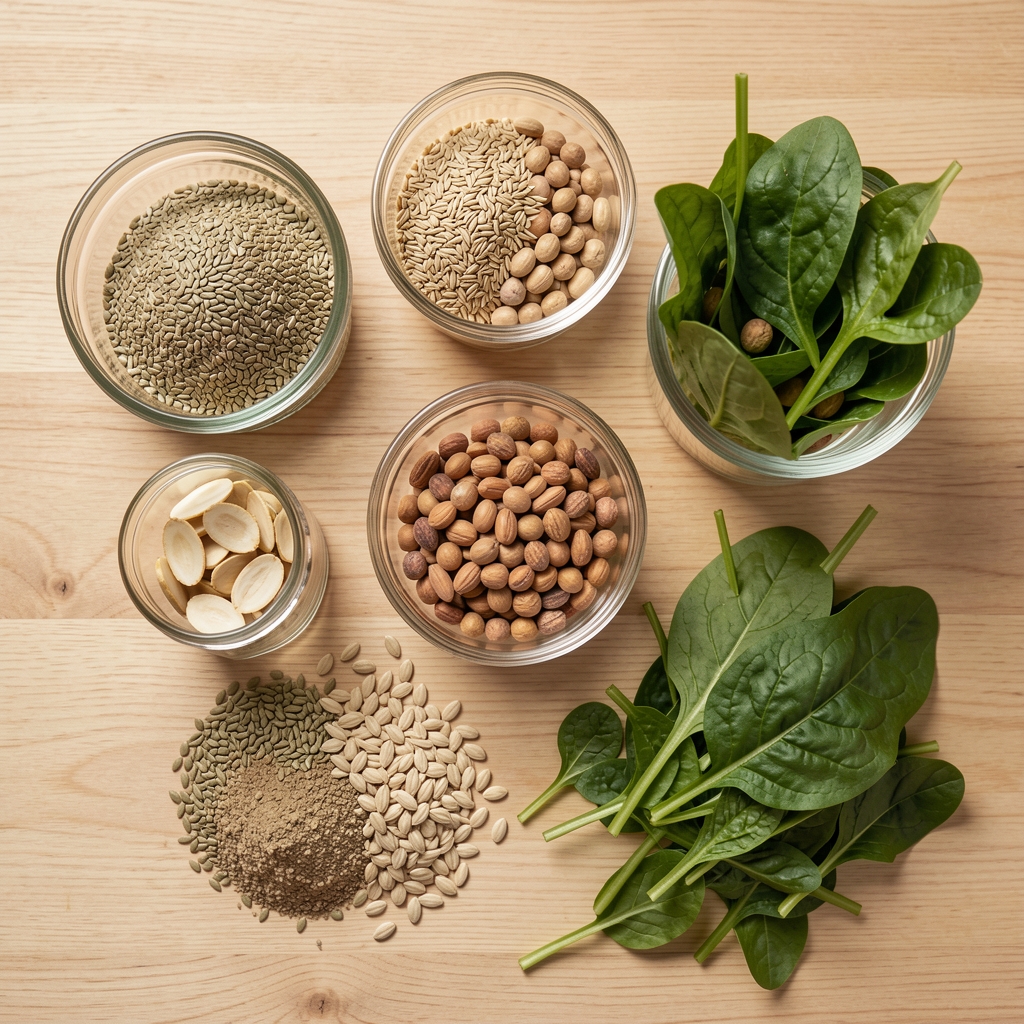
The relationship between whole-food sourced minerals and structured protein intake is one of the more consistently documented intersections in men's nutritional research. Zinc, magnesium, and selenium — three minerals that appear repeatedly in the formulation breakdowns submitted for independent batch verification — each play distinct roles within the context of a lean, active dietary pattern. This entry examines the sourcing and evidence record for each.
The distinction between whole-food sourced minerals and synthetically derived equivalents is a subject of active discussion among nutrition writers. The core argument for whole-food sourcing rests on bioavailability — the degree to which the mineral is absorbed and utilised within the body's normal metabolic processes. Published nutritional research suggests that minerals embedded within a food-matrix context may behave differently from isolated mineral salts, though the literature on this question is ongoing and not settled.
For the purposes of this editorial review, "whole-food sourced" refers to minerals that are derived from foods or botanical concentrates rather than synthesised from inorganic mineral salts. The sourcing documentation for such ingredients is typically more complex — it involves tracing the food-source supply chain rather than merely the mineral extraction process — and correspondingly more informative when available.
In the Indonesian supplement market context, whole-food sourced mineral products occupy a premium segment. The batch-verification documentation accompanying these products varies substantially between suppliers, and a portion of this entry is dedicated to characterising what adequate documentation looks like for each of the three minerals under review.
Zinc is one of the most extensively reviewed minerals in men's nutritional literature. Its role in supporting normal cognitive function and immune health is well-established across published studies. Within a protein-rich eating pattern, zinc concentrations in food sources such as legumes, seeds, and certain grains interact with phytic acid in ways that can affect absorption — a detail that well-documented whole-food sourced formulations typically acknowledge in their accompanying literature.
The principal sourcing geographies for whole-food zinc concentrates include pumpkin seed extract (originating predominantly from Eastern European cultivation networks) and chickpea-derived zinc fractions (from South Asian agricultural supply chains). Both present adequate traceability when suppliers publish full batch certificates that include country-of-origin documentation alongside elemental concentration figures.
Within a daily routine structured around protein-rich meals, zinc supplementation is most commonly observed as a morning or post-activity intake. The interaction between zinc and the amino acid content of a high-protein meal has been the subject of several independently published nutritional analyses, the methodologies of which vary — but the general directionality of the observed relationship is consistent across the literature reviewed for this entry.
"A well-documented mineral formulation is one where the sourcing record answers questions the reader has not yet thought to ask."
— Nathaniel Ashcroft, Toraman Dispatch
Magnesium's role in contributing to normal energy metabolism and reducing tiredness is among the better-supported claims in nutritional supplement literature. The mineral participates in several enzymatic processes within the body's standard metabolic functioning, which gives it relevance across both sedentary and highly active populations — though the active lifestyle context, where substrate turnover is higher, represents a more pronounced context of interest.
For whole-food sourced magnesium, the typical food matrices include green leafy vegetables (spinach concentrate, for example), pumpkin seeds, and certain legumes. The processing required to concentrate magnesium from these sources without degrading the associated food matrix is a meaningful differentiator between suppliers — some processes preserve the broader nutritional context while others strip the mineral to an isolated compound that is then reformulated.
In the context of a structured protein-rich meal plan, magnesium is frequently positioned as an evening-routine mineral — taken as part of a post-activity recovery practice. Several published nutritional studies have examined this framing in active adult populations. The evidence is observational in character, which is consistent with the nature of nutritional research generally, and the Toraman Dispatch review accepts this epistemological limitation.

Whole-food mineral sources — Toraman Dispatch ingredient review, Feb 2026
Selenium is the most narrowly dosed of the three minerals under review. Its contribution to the protection of cells from oxidative stress is a well-established claim in nutritional literature. The margin between an adequate intake and an excess intake is narrower than for zinc or magnesium, which places a higher responsibility on the accuracy of batch-verified concentration figures.
The most commonly observed whole-food source for selenium in commercial supplement channels is the Brazil nut — a food that is naturally one of the highest-concentration selenium sources available. Brazil nut extract and Brazil nut flour formulations are both in circulation within the Indonesian market. The variability in selenium concentration between individual Brazil nuts, and between batches of Brazil nut-derived ingredient, makes third-party batch verification particularly important for this mineral. Suppliers who publish selenium-specific assay results alongside general batch certificates represent a meaningful step above those who do not.
Within a structured daily eating pattern, selenium-containing formulations are typically positioned as once-daily inputs given the narrow concentration range. This is one context where the editorial distinction between a well-documented formulation and a poorly documented one carries practical weight for the reader constructing their routine.
The integration of mineral supplementation into a protein-rich eating pattern is less about timing precision and more about consistency of practice. The published nutritional research on mineral absorption does not consistently support a single optimal window — rather it suggests that regular intake within a varied whole-food meal context is the most reliably observed correlate with adequate mineral status.
For readers constructing a morning routine, a practical approach is to consider the mineral profile of each main meal and identify gaps that whole-food sourced supplements might address. A protein-rich breakfast built around eggs and legumes, for example, already contributes to zinc and selenium intake through food-matrix sources. Supplementation, in this context, functions as a documented layer above an already mineral-engaged diet, not as a replacement for food-sourced intake.
This framework — supplement as documentation layer, not primary source — is consistent with how the most rigorously sourced formulations in the Indonesian market position themselves. It is also consistent with the editorial position of this publication: that transparency of composition record and integration with balanced eating habits are the primary criteria by which a supplement formulation should be evaluated.
Zinc from whole-food matrix sources presents bioavailability advantages over isolated mineral salts in the published literature, though the research is ongoing. Sourcing documentation should include country-of-origin and concentration assay figures.
Magnesium from green leafy vegetable concentrates and seed matrices offers a credible whole-food sourcing pathway. Evening-routine positioning is the most consistently observed pattern among active adult consumers in the Indonesian market.
Selenium requires the most rigorous batch documentation of the three minerals. Brazil nut-derived formulations vary substantially in concentration between batches. Third-party selenium-specific assay results are the benchmark to look for.
All three minerals perform most coherently within a structured protein-rich eating pattern. Supplement intake is best understood as a documented complement to whole-food sources, not a substitute for them.
Toraman Dispatch is an independent editorial publication. Articles published here are editorial in nature and reflect the writers' observations on everyday wellness practices. The content is not intended as professional guidance. We recommend speaking with a qualified wellness or nutrition professional before introducing any new habit or routine to your daily life, particularly if you have specific dietary requirements.

Nathaniel Ashcroft leads editorial activities at Toraman Dispatch. His work focuses on the documentation of ingredient sourcing, batch verification practices, and the intersection of nutritional research with men's active lifestyle routines in Southeast Asia.
More from this author →