Mineral Complex
Whole-Food Sourced Minerals and the Daily Protein-Rich Eating Pattern
Nathaniel Ashcroft
·
·
9 min read
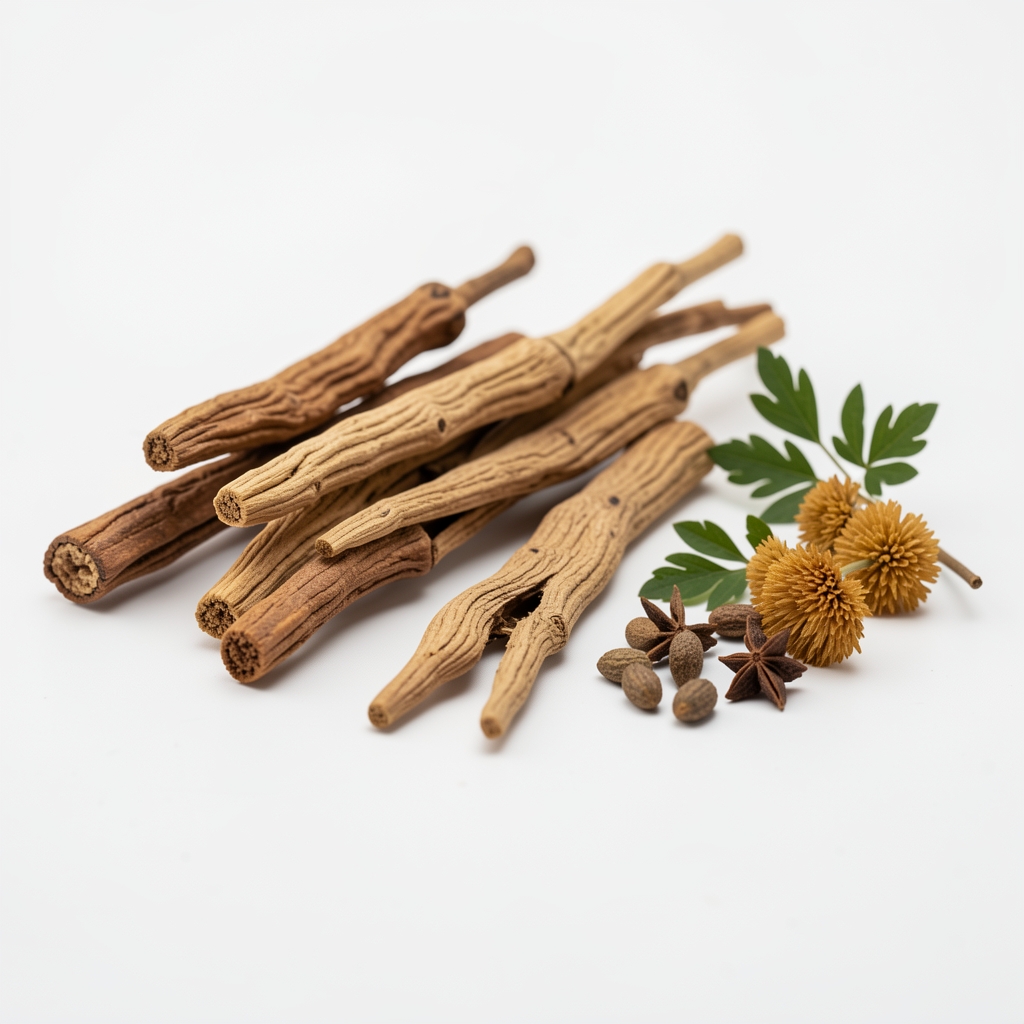
The category of botanical adaptogens has been observed across nutritional research literature for several decades. What draws contemporary attention is not the plants themselves — ashwagandha, rhodiola rosea, eleuthero — but the gradual accumulation of independent batch-verification data that now accompanies their distribution through documented supplement channels. This entry maps that landscape as it stands in early 2026.
The term "adaptogen" originates from Soviet-era nutritional research in the mid-twentieth century, where it was used to describe botanical compounds that appeared to support non-specific resistance to environmental stressors. Over subsequent decades the concept migrated from specialist nutritional literature into wider consumer awareness, particularly within markets oriented toward active lifestyle support and performance nutrition.
What distinguishes the current period from earlier waves of adaptogen interest is the presence of more structured sourcing documentation. Several suppliers now publish batch certificates that include composition analysis and traceability records from cultivation site to final form. This does not make the botanical claims themselves more or less accurate — but it does make them more auditable, which is a meaningful shift for any editorial publication attempting to assess ingredient transparency.
The three most consistently documented adaptogens in current Indonesian supplement channels are ashwagandha (Withania somnifera), rhodiola rosea, and Siberian eleuthero (Eleutherococcus senticosus). Each arrives with a different research footprint, a different sourcing geography, and a different set of claims attached to its distribution. This entry takes each in turn.
Ashwagandha is the most widely distributed adaptogen within Indonesian wellness channels. The root extract form is most common, typically standardised to a withanolide concentration that suppliers indicate on their batch certificates. The origin geography for commercially available ashwagandha is predominantly the Indian subcontinent — Rajasthan and Madhya Pradesh account for a significant proportion of cultivated yield.
From a documentation standpoint, the most consistent claim attached to ashwagandha in current channel literature relates to energy metabolism and the management of subjective fatigue. Published nutritional research from the past decade has examined its role in supporting normal energy production and reducing self-reported tiredness in active adults. The evidence base is observational in character and remains ongoing.
Batch verification practice for ashwagandha is more developed than for many other botanicals in this category. Several third-party verification bodies issue certificates that cover heavy metal screening, microbial load, and withanolide concentration range. Suppliers who publish these certificates openly present a more auditable product than those who do not. The Toraman Dispatch sourcing review has noted this distinction across six Indonesian-market ashwagandha products evaluated in the current cycle.
"Transparency of composition record is the single most meaningful differentiator in the current adaptogen market."
— Nathaniel Ashcroft, Toraman Dispatch
Rhodiola rosea presents a different research profile from ashwagandha. The plant is native to Arctic regions — Siberia, Scandinavia, and high-altitude Central Asian territories — which gives it a narrower cultivation geography and a correspondingly more traceable supply chain. Most commercially available rhodiola extract originates from Siberian and Mongolian sources.
The published nutritional research around rhodiola has examined its potential role in supporting stamina and reducing self-reported fatigue in active adults across a range of conditions. The key active constituents — rosavins and salidroside — are typically the markers indicated on batch certificates, though standardisation ratios vary between suppliers. This variability is worth noting for any reader assembling a supplement routine from multiple sources.
In the Indonesian market context, rhodiola remains a secondary adaptogen by volume — ashwagandha accounts for a larger share of shelf presence and search interest. However, among readers of editorial nutrition publications, rhodiola features disproportionately highly in formulation inquiries, suggesting a more engaged and research-oriented consumer segment seeking it out.
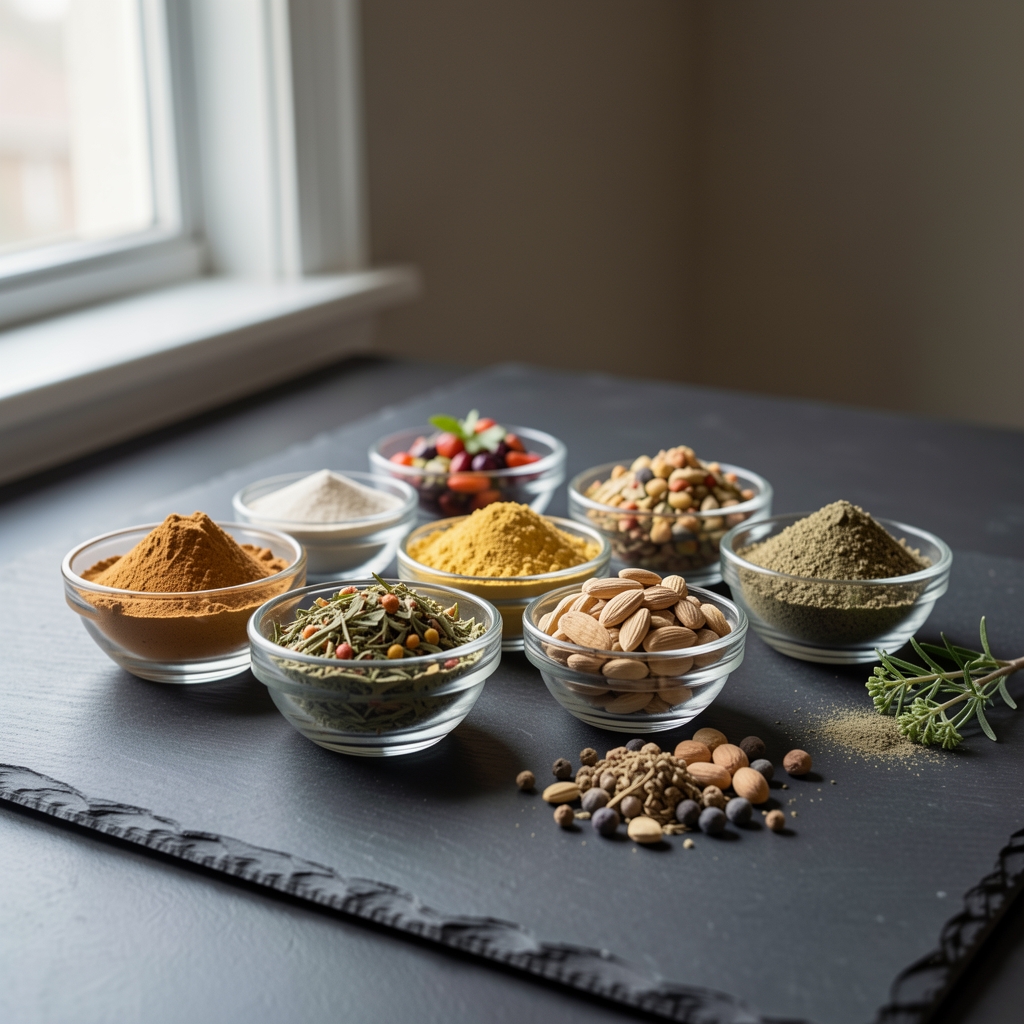
Comparative formulation study — Toraman Dispatch sourcing review, Jan 2026
Eleuthero occupies a distinct position in the adaptogen category: it has a long history of use within Soviet-era occupational health contexts, yet its contemporary research footprint is thinner than that of either ashwagandha or rhodiola. The active constituents — eleutherosides — are less consistently standardised across commercial suppliers, and the batch-verification practice around eleuthero products is correspondingly less developed.
This does not diminish the plant's role in a documented supplement routine — it simply places a higher burden of research on the individual reader before selecting an eleuthero product. Suppliers who publish complete batch certificates covering eleutheroside identification, not merely weight per serving, are identifiable and worth prioritising.
Within a balanced daily nutrition approach, eleuthero is most commonly observed in morning routine contexts — taken alongside a protein-rich breakfast or as part of a broader mineral and botanical stack. Its role in supporting energy metabolism has been the subject of several independently published nutritional studies, though the methodology of these studies varies in rigor.
Ashwagandha holds the most developed batch-verification infrastructure of the three. For readers prioritising ingredient transparency, it represents the most auditable entry point into adaptogen supplementation.
Rhodiola's narrower cultivation geography makes supply chain traceability comparatively straightforward — but standardisation ratios between suppliers vary enough to warrant scrutiny before product selection.
Eleuthero remains underserved by the current verification ecosystem. Readers assembling supplement routines that include eleuthero should apply additional scrutiny to batch documentation before purchasing.
All three adaptogens perform best when integrated into a structured daily routine that includes whole-food nutrition and consistent physical activity — not as standalone inputs, but as one documented layer within a broader nutritional framework.
Toraman Dispatch is an independent editorial publication. Articles published here are editorial in nature and reflect the writers' observations on everyday wellness practices. The content is not intended as professional guidance, nor as direction for the management of any specific condition. We recommend speaking with a qualified wellness or nutrition professional before introducing any new habit or routine to your daily life, particularly if you have specific dietary requirements.

Nathaniel Ashcroft leads editorial activities at Toraman Dispatch. His work focuses on the documentation of ingredient sourcing, batch verification practices, and the intersection of nutritional research with men's active lifestyle routines in Southeast Asia.
More from this author →